Concrete, Steel and the Look of a Stadium
Concrete and steel shape a stadium’s visual character: learn how texture, colour, joints and ageing influence the way a ground feels from outside and in.
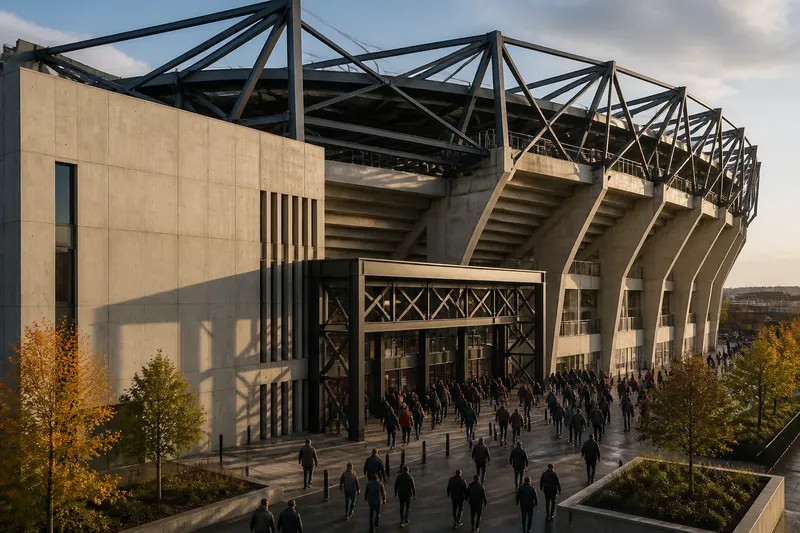
Why do concrete and steel make a stadium look like a stadium? Concrete and steel stadium design gives these familiar materials a visible role: broad concrete forms suggest weight and permanence, while exposed steel frames can make a ground appear open, precise or in motion. Their character comes not only from the materials themselves, but from how designers shape, finish and reveal them.
Why are concrete and steel so closely linked with stadiums?
They became strongly associated with stadiums because large sporting venues need an unmistakable public presence. Concrete can be formed into substantial walls, terraces and supports; steel can be arranged into slender frames, trusses and repeated lines. Seen together, they offer a visual vocabulary that reads clearly at a distance and on a busy matchday approach.
There is also a shift in architectural expression between the two. A concrete exterior may appear grounded and continuous, particularly when its surfaces run across several levels. Steel elements often make the structure legible: a visitor can pick out a frame, brace or column and follow its outline with the eye. Neither impression is automatic. A painted steel frame can blend into its surroundings, while carefully textured concrete can become the most decorative part of a façade.
Look at the arrangement, not just the material name. Repeated supports, visible joints and the scale of each surface often do more to define the stadium’s appearance than the choice between concrete and steel.
What does exposed concrete contribute to a stadium’s appearance?
Exposed concrete gives a ground visual mass. Its colour, grain and casting marks can make a large building feel direct and substantial rather than dressed in a separate outer skin. Smooth panels tend to read as composed planes; rougher finishes catch changing daylight and reveal more surface variation.
Concrete also carries the pattern of its construction. The lines between pours, the arrangement of formwork marks and the edges around openings can create an orderly rhythm. Designers may leave these details visible, soften them with a finish or use colour to distinguish one volume from another. A simple wall can therefore feel deliberate rather than unfinished when its edges and surface are consistently resolved.
At close range, weathering becomes part of the visual character. Rain paths, dust and repairs can make a surface appear varied over time. That may suit a ground whose identity rests on a robust, unpolished look; a more uniform architectural effect calls for a different approach to finishes and upkeep. Concrete’s appearance is not fixed at handover.
How does steel change the visual character of a ground?
Steel can make a stadium’s construction appear drawn in lines. Columns and beams outline volumes, while repeated members create a visible cadence across the exterior or interior. Because steel components can look relatively slender beside broad concrete forms, they may lend a large venue a more open and finely articulated appearance.
Colour strongly affects that reading. A dark frame can recede against shadow, leaving the shape of the stadium in focus. A bright or contrasting finish can bring individual members forward and make the structure a graphic feature. Galvanised or naturally toned steel has another effect: its surface reads as material rather than as a painted accent.
The connection details matter visually, too. Plates, bolts and junctions can be concealed for a quieter appearance or left legible to emphasise how the frame is assembled. A clear structure may give visitors a sense of order, but an overload of competing lines can make the exterior difficult to read. The useful question is whether each visible element helps explain the building’s form.
How do concrete and steel work together visually?
Concrete and steel are often most effective when they are not asked to make the same impression. A concrete base can anchor the stadium, while steel above it gives the silhouette a lighter outline. The reverse arrangement can also work: a steel frame may establish a strong overall order, with concrete surfaces filling particular sections and adding visual depth.
Say a fictional local ground has a broad, blank concrete frontage and a steel entrance frame that is hard to distinguish from it. Its design team could introduce a consistent finish to the entrance steel and arrange the frame so it clearly marks the public doorway. The expected visible result would be a more legible arrival point, without changing the frontage’s underlying mass.
Transitions deserve attention. Where the materials meet, a recessed line, a change in colour or a carefully aligned edge can make the boundary look intentional. If steel members stop abruptly against a concrete wall, the junction may seem incidental even when the overall form is striking. Follow the seam with your eye: does it reinforce the building’s composition, or interrupt it?
Which visual questions should you ask about a stadium?
Does concrete have to look grey?
No. Concrete can be pigmented, given an aggregate-rich finish or treated to create a different texture and tone. The chosen surface still needs to suit the stadium’s broader palette and how the façade will be seen at close and long distances.
Does exposed steel always make a stadium look industrial?
No. The impression depends on the frame’s proportions, colour, connections and relationship to other surfaces. Fine, regularly spaced members can read as crisp and light, while bulky or dark components may feel more utilitarian.
Why do joints and surface lines matter so much?
They set a visual rhythm across materials that might otherwise appear plain or oversized. Repeated lines can make a façade feel ordered; irregular or poorly aligned seams can distract from its overall shape.
Can weathering suit a stadium’s design?
It can, if the intended appearance allows surfaces to change and the resulting marks remain visually coherent. Where a clean, even finish is central to the design, material selection and maintenance planning need to support that aim.
What should you notice when comparing stadium materials?
Start with the stadium’s outline from a distance, then look at one entrance or façade at walking pace. Notice which material establishes the main shape, where the other material appears, and whether their colours and textures make that relationship easy to read.
- Surface: Is the concrete smooth, patterned, textured or visibly marked by formwork?
- Frame: Do steel members create a clear rhythm, or compete with one another?
- Colour: Does the palette distinguish the main structure from entrances and other features?
- Junctions: Are changes from concrete to steel aligned and visually purposeful?
- Ageing: Do weather marks support the intended character, or make the finish look inconsistent?
For concrete and steel stadium design, the most telling detail is often the meeting point between a heavy surface and a drawn line. Notice how that junction is handled, and the ground’s visual identity becomes easier to understand.