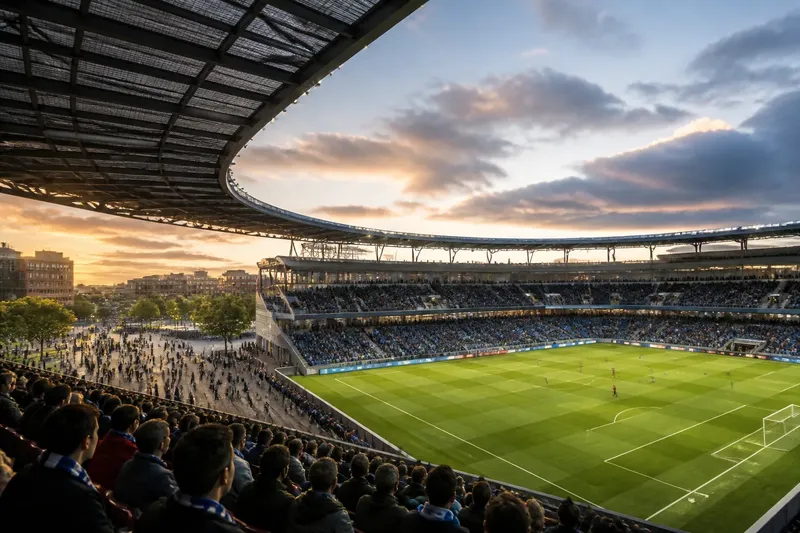
A Matchday Walk: Notice the Spaces Before Kick-off
A matchday walk reveals how the journey changes from arrival to departure, helping you notice pressure points, pauses and useful facilities along the way.
Where does your matchday journey begin to feel rushed, tiring or hard to follow? A matchday walk can reveal how the experience changes from the journey to the ground through the time after the final whistle. Rather than concentrating on the route to your seat, notice the pauses, decisions and practical needs that shape the whole visit.
Follow the visit in order: arrival near the stadium, time outside, entry, the interval, leaving your seat and the journey away. Keep your ticket and any access information to hand, but focus on what the spaces ask you to do: wait, stand, find shelter, meet someone or move on. Stay clear of busy routes whenever you pause.
Watch how arrival sets the pace for the visit
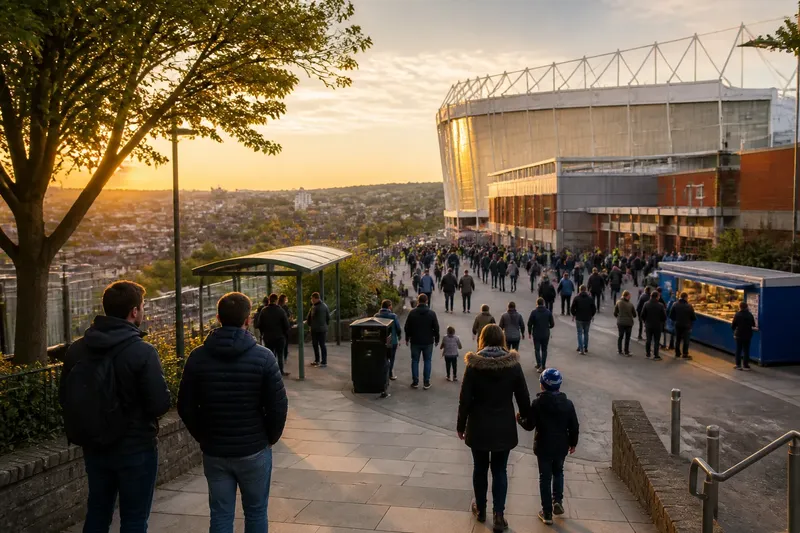
The matchday experience can feel demanding before you reach the turnstiles. You may arrive from a railway station, bus stop, car park or nearby street, each with its own waiting and walking conditions. Notice whether there is room to pause without blocking others, and whether the approach offers shelter or a place to regroup if your party becomes separated.
Keep the observation specific. Note whether the pavement narrows near a queue, whether a meeting point is easy to distinguish from the passing crowd, and whether people have somewhere to wait off the main flow. Do not stop in a doorway or at a crossing to check your phone; move to a safe edge first.
Say you arrive with a friend from a station and find the planned meeting spot crowded by a growing queue. You both move to a clearly visible open area away from the entrance, agree to meet there if separated, and then continue towards the ground together. The result is a shared reference point that does not obstruct people entering.
Choose a meeting place that is visible and outside the main stream of people.
Notice what the pre-match wait asks of spectators
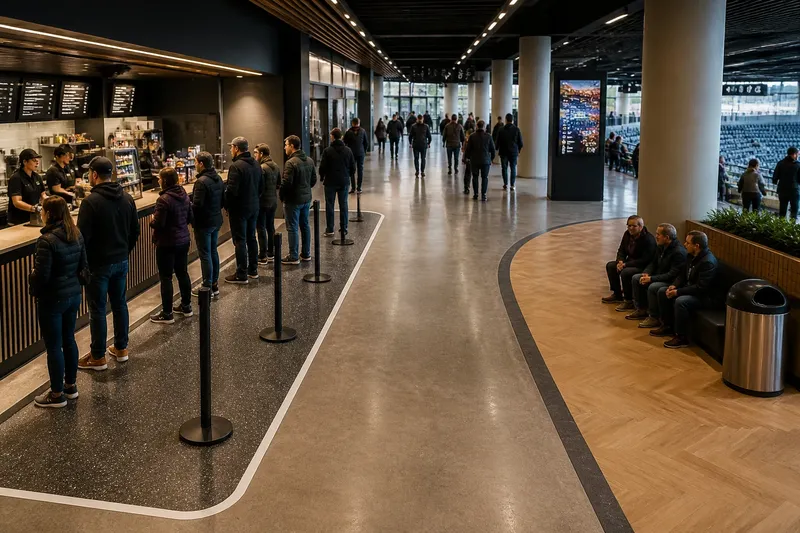
Waiting is part of the visit, whether it happens outside, at a service point or near the seating area. Look at how the space accommodates people who are standing, travelling with children, carrying belongings or needing a quieter moment. Notice whether there is a clear place to wait and whether the flow past it remains open.
Pay attention to practical details rather than trying to judge the whole venue from one moment. A queue may obscure a bin, a shelter may be occupied, or a meeting point may be too close to a busy entrance. If you need to stop, choose a place that leaves doors, ramps and accessible routes clear.
Imagine you arrive early with a child who needs a break before taking a seat. You find a quieter permitted area away from the queue, pause there, and check the venue’s information for the nearest suitable facility. The useful result is a calmer place to regroup without blocking the entrance or relying on guesswork.
Use the interval to notice comfort and choice
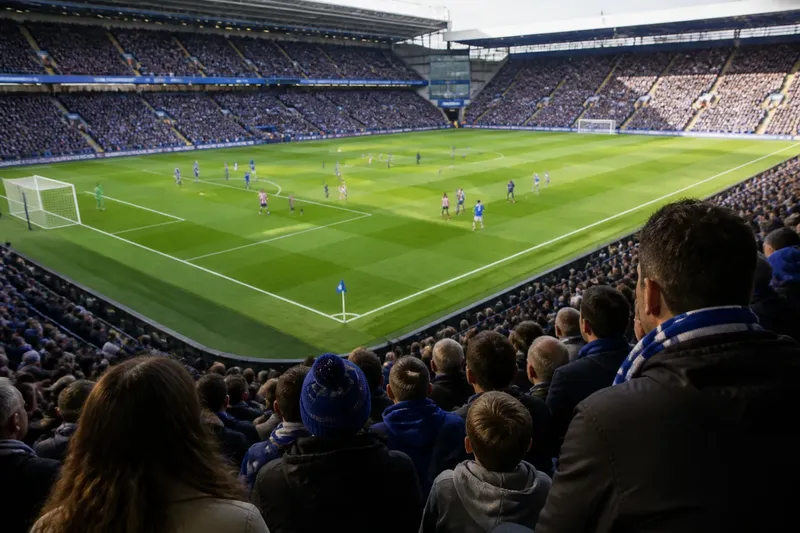
The interval compresses several needs into a short pause: people may want refreshments, a toilet, a chance to stretch or a brief conversation. Notice whether those options are apparent from where you are seated and whether choosing one means giving up a comfortable place to wait. The quality of the pause depends not only on what is available but also on how easy it is to decide and return.
Think about the experience from your own seat rather than following the largest crowd. If you need a facility, check the venue’s signs or information before leaving, and consider whether another person in your group can remain at the seat. Follow staff instructions and keep accessible routes clear.
A simple note can make the next visit easier: remember which option suited your needs, where you paused, and whether the return felt straightforward. Avoid treating a busy interval as a reliable guide to how the venue will feel at other times.
Consider the whole matchday journey?
What should I notice before entering the stadium?
Look for a safe place to pause, a practical meeting point and any pinch in the pedestrian space near queues. If your planned meeting spot is crowded or obstructive, choose a visible alternative away from the entrance.
How can I make a short break easier to manage?
Decide what you need before leaving your seat, then check the venue’s information for the relevant facility. If the route or return point is unclear, ask staff rather than entering a restricted area or following an unsuitable crowd.
What should I observe when leaving?
Notice whether the space encourages people to leave at once or offers a safe place to wait for companions. If your group becomes separated, move away from the main flow before contacting one another and agree on a visible meeting point.
How do I record a useful observation?
Write down the moment, the need you had and what made the space easier or harder to use. If the issue affects access or safety, share it with venue staff through the appropriate channel.
Make the departure part of the visit
Leaving can bring its own decisions: wait for companions, head towards public transport, or pause until the crowd thins. Notice whether there is a safe place to regroup and whether signs or staff directions make the available options clear. Do not stop in a doorway, on a stair or across an accessible route while deciding what to do next.
If you are travelling with others, agree before the event where to reconnect if you become separated. A good meeting place should be easy to describe and away from the busiest exit. For travel details or access arrangements, use the venue’s current information and ask staff when something is unclear.
Record observations that can improve your next visit
A matchday walk is most useful when it captures changes in the experience: arriving, waiting, taking a break, returning to your seat and leaving. Record what you needed at each point, what helped, and what made the decision harder. Keep observations tied to your visit rather than treating them as a judgement of every matchday or every spectator’s needs.
- Check whether the meeting place is visible from the approach; if it is hidden or crowded, choose a clearer spot away from the entrance.
- Check whether a queue leaves a safe place to pause; if it blocks the pavement, move to an open area and avoid stopping beside the line.
- Check whether shelter is available where you expect to wait; if it is occupied or exposed, use another permitted place to regroup.
- Check whether the facility you need is clear from your seat; if its location is uncertain, consult venue information or ask staff before leaving.
- Check whether your group has agreed a reunion point; if nobody can describe it clearly, choose a visible place outside the main flow.
- Check whether the departure area allows people to wait without blocking others; if it does not, move on to a safe open space before contacting companions.
For example, imagine you arrive from a bus stop with a companion, plan to meet near the main gate, and find that area crowded. You move together to a visible space away from the entrance and agree to use it if separated; during the interval, you check venue information before leaving your seat for a facility. After the match, the gate area remains busy, so you follow staff directions to an open place before contacting your companion. The trade-off is a little extra walking in exchange for clearer, safer pauses at each stage.
Keep your matchday walk focused on the whole visit, not just the journey from entrance to seat. A short note about one useful meeting place, one comfortable pause and one departure decision can make your next matchday walk easier to plan.